We are not OK
What do the war and defunding the arts have in common?

Dear Comrade,
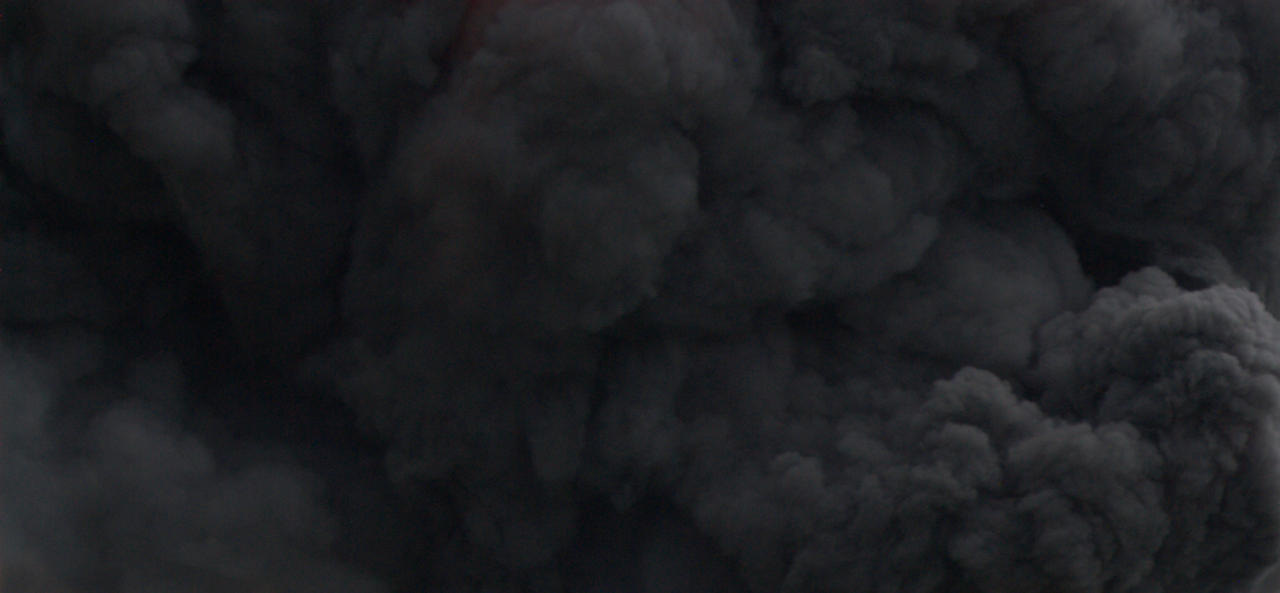
Black rain falls on Tehran, leaving a layer of pitch on every leaf of every potted plant, coating every balcony and every apartment block. The burning oil deposits created a mixture of sulphur and nitrogen oxides that mix with rain to form sulphuric and nitric acid, metallic compounds and droplets of oil that hang in the air. Black rain causes chemical burns to skin, damages lungs, poisons water and food supplies, and puts Tehran’s population of 10 million at risk of developing cancer and chronic illness for decades to come. As with every war, the damage to humanity and to the environment is incalculable. As Arundhati Roy said, we are mourning in future tense. Mourning what is to come.
We’re over here in Europe meticulously recycling our oat milk tetrapacks and taking the train instead of a plane, while these genocidal monsters use cutting edge technology not to advance the interests of humanity but to kill thousands of innocent civilians and destroy their memory and infrastructure and ability to live in peace. Dense plumes of black smoke eclipse the sun with an unprecedented amount of pollution and a senseless inflicting of suffering that will continue to ripple for generations. Courtesy of the genocidal state of Israel, its US ally, and now North Korea and the UK. Starmer has allowed US planes and bombers to land at RAF sites in Gloucestershire and will possibly do more after Tony Blair put in a word that we should be protecting the “special relationship” and ensuring a rerun of his favourite Iraq-style mistakes. Our country once again is complicit in war crimes. For no discernible purpose and with no discernible aim. Other than to, perhaps, line the pockets of a few arms manufacturers, and prevent Bibi from getting tried for corruption and crimes against humanity.
Hussam Ayloush at AlJazeera put it bluntly:
We are told this war is about human rights. About women’s rights. But bombs do not liberate people. Air strikes do not advance democracy. Slaughtering schoolgirls is not “feminist” foreign policy.
If human rights were truly the concern, our government would not selectively apply them based on geopolitical convenience. Our own ally, Israel, is engaged in a genocide that has killed and wounded more than 200,000 Palestinians, most of them civilians. Not funding that mass murder of children would have been a good start for our humanitarian concerns.
Australian poet Omar Sakr made another very important point: the West loves to wail over women’s repression, all those poor women forced to wear the veil in those backwards, barbaric countries. The orientalist dream that Muslim women must be liberated!
But how does the West treat women? We see that in a random sleepy village in south-east France (population ca. 6000), some 70 men were willing to rape an unconscious Giselle Pelicot, and did not think they were doing anything wrong. We see that the right to safe abortion is being removed. We see AI stealing women’s faces and creating deepfakes of non-consensual pornography. We see women killed by their intimate partners. We see in the UK that 1 in 4 women has been raped or sexually assaulted. We see fewer than 3 in 100 rapes recorded by police result in someone being convicted. We see women bearing the brunt of unpaid domestic and emotional labour. We see that childcare is unaffordable. We see less investment in research that would cure endometriosis than in research measuring how attractive to men this high-estrogen disease makes women. We see economies deteriorating to such an extent that there is a growing Trad Wife movement whose whole ideology consists of 1) having enough leisure time to make your own marshmallows from scratch and 2) acquiring this leisure time through complete economic dependency on your male spouse (what clearer signs do we need that we are heading towards a Handmaid’s Tale society?). We see Israel, the US, and by proxy the UK, creating the conditions that make life as materially hell as possible for women in Gaza: C-sections with no anaesthesia, miscarriages, hunger, killing and maiming their children (who, if they grow up at all, will grow up to be dependent on care -- the kind of care that normally falls to women). Sakr writes:
“The colonial war for land and resources is cast as a battle of patriarchies, one clothed, and the other pornographic, with the bodies of women as the field of conquest.”
Still no mention of war from the people around me. Most of the scholars and translators and literary people I speak to day by day have not brought it up. If my algorithm didn’t know I am already interested in these things, I could easily glide through life these days thinking no bombs were falling at all. The supposedly intelligent and well-informed people I encounter omit to make even a passing comment about the war, either because it’s too overwhelming and we don’t want to bring the mood down, or because the issue is perceived to be too complex and it’s too hard to know what to say. And obviously one should never speak about any given topic unless one has encyclopaedic knowledge of it. Maybe cancel culture caught our tongue. The mention of anything involving women’s rights or women’s veils should be carefully avoided to avoid the public humiliation of being cancelled on now-defunct Twitter.
On stage at the London Book Fair, panellists who have been carefully selected to showcase how welcoming and “ethnically diverse” and forward-looking the industry has become, discuss “global literature” and the importance of building bridges through translation, all without a single mention of the war. How is this possible? What are we even doing here?
I have said before that trying to make literature without a search for truth is like trying to make music without a sense of rhythm. Truth is the backbone of fiction: people read because they want to find their truth, and truth is easier to absorb when it happens to someone else, such as a character in a fictional story. We need that kind of mirror. Humanity has always needed it, and it is why we even translate literature in the first place.
I find it quite funny how the book industry loves talking about producing commercially-viable work that will appeal to readers. They go on and on about how this is supposed to be a money-making business, all while also being wildly out of step with the times, blissfully removed from what vast swathes of the population actually want to read/hear/consume/be moved by (even if not yet aware of it). And this can be seen reflected on the publishing industry’s dwindling bottom lines. Currently, the industry still thinks it’s only the female middle-class white pensioners who have any interest in reading books, and as such, only books that will appeal to them will ever get printed. I wonder, though, whether the industry’s risk-averse approach is failing to rake in the kind of profits that could be found by appealing to a much more diverse demographic. After all, aren’t all those podcast-devouring men also hungry for stories?
This situation could be so different if publishers had proper support from the State, enabling them to take risks and finding new ways to present stories using digital media and finding more accessible ways to deliver audiobooks and short formats. To be able to procure this kind of funding, as for many other things, we need to tax the rich. Use that money to properly fund cultural enterprises and initiatives, so that the publishing industry doesn’t have to be trapped in a cut-throat competition against Meta and Amazon and Spotify, which it is doomed to lose. These monopolies also need to be tightly regulated, and should be seen as thieves directly stealing the livelihoods of booksellers, writers, musicians, cultural workers, and creators of all kinds, making their lives more and more precarious.
Unfortunately, defunding the arts while at the same time giving free reign to the Meta and Amazon tycoons is leaving our cultural and spiritual education in the hands of the Andrew Tates of the world. We are slowly becoming illiterate as a result. Meanwhile the London Book Fair is leaving its long-loved venue in West London for cheaper premises in East London, as did The Independent 3 years ago, and god knows how many other culture-adjacent enterprises. This kind of downgrading is mirrored in our own lives: an endless gentrification of our streets and of our minds, endlessly displacing long-rooted communities and ecologies of thought. All to hand the premises over to whom?
The same is happening in our dear green Glasgow, with the Centre for Contemporary Arts closing down and 5 arts organisations being served 28-day eviction notices after their landlord quadrupled the rent. And the landlord is a company managed by the City Council? Can someone explain this part to me like I’m 5, as I don’t think I understood? Isn’t the City Council preventing this sort of thing from happening, capping the rent to ensure preservation of initiatives that are in the interest of society? Who will be able to pay that kind of rent, and more importantly, do we even want them in our city? To say that killing the arts in a city famed principally for its arts scene is shortsighted is both ridiculously obvious and a vast understatement. Glaswegians deserve better. We can already not afford the weekly shop or to put the heating on, and getting a doctor’s appointment is harder than buying illegal drugs to dull the pain of whatever physical or mental ailment afflicts us. Our quality of life and healthy life expectancy have been steadily declining for the past 10 years. The huge fire next to central station only makes the feeling of decline more glaring. To lose the arts as well in this context is akin to having our dreams stolen right out of our skulls. What else will they take from us?
I’ve been living in a houseshare in Norwich, sharing with 5 people in their late 20s and early 30s. Instead of the boisterous atmosphere of partying and camaraderie I was expecting, I found my housemates utterly exhausted, burnt out and frankly depressed. Despite working full-time, furiously meal-prepping and avoiding unnecessary luxuries such as buying a coffee at work, finances were extremely tight, workplaces were exploitative, social lives were non-existent. The landlord, of course, was greedy and disrespectful. Over the space of 2 months, we managed the grand total of one hour of hangout time, a non-drinking session which was scheduled 2 weeks in advance, and not because any of us had a busy social calendar. Turns out I am not the only one working 3 jobs. We mostly avoided speaking to each other just in case we would get involved in a conversation that would deprive us of the precious few minutes of resting time left in the day. I couldn’t help but notice this is what it must be like for most young people nowadays. Increasingly fragmentary and isolated, increasingly devoid of joy and hope.
Meanwhile in the strait of Hormuz, insurance companies in London cancel the insurance on ships carrying not just oil but the essential fertilizers that help grow the crops that feed the world. These ships will not be taking their shipments to where they need to be. The war is not really happening far away, because nothing is really far away in this world. It only seems that way to our tiny brains. We will be feeling the effects of our leader’s decisions in about 9 months’ time, when global food shortages hit our supermarket shelves, along with whatever as-yet unimagined climate disasters are coming our way. Capital punishment a thousand times over would not be enough for those overseeing the kind of suffering we are likely to see.
What words of hope can I put in here? Only that I am glad for this space, glad for poetry and glad for these letters, where we can talk about things, still freely and without the need for clandestine alphabets!
With much love, and much rage,
Juana